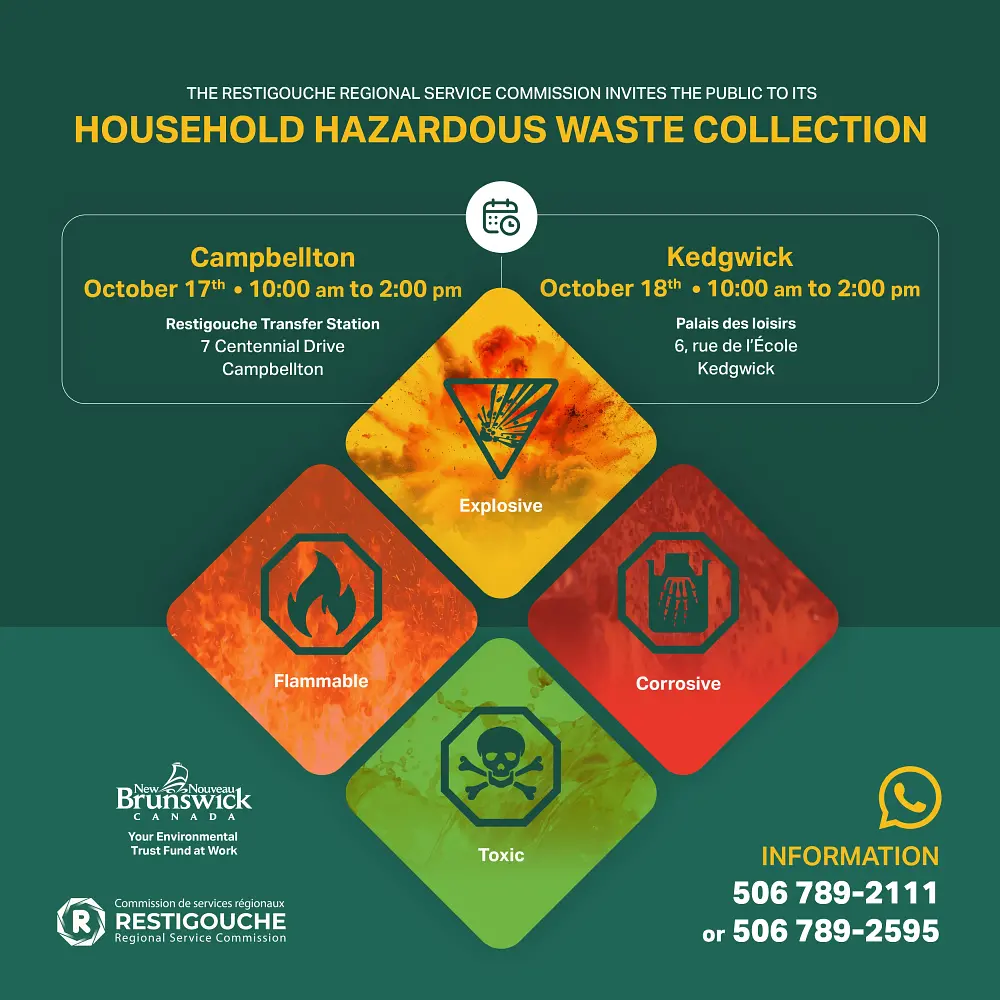
Household Hazardous Waste (HHW) refers to everyday products found in homes that contain chemicals or substances that can be harmful to people, property, and the environment if not disposed of properly.
These materials must not be placed in regular garbage or recycling. When disposed of incorrectly, they can contaminate soil and water, damage landfill equipment, and pose health and safety risks to workers and residents.
Examples of Household Hazardous Waste include:
- Paints, stains, varnishes, and paint thinners
- Used oil, oil filters, gasoline, and other fuels
- Pesticides, herbicides, fertilizers, and pool chemicals
- Household cleaners, solvents, and degreasers
- Batteries (household and automotive)
- Fluorescent tubes and compact fluorescent bulbs
- Aerosol cans (with contents)
- Automotive products such as brake fluid and antifreeze
How to dispose of HHW
HHW materials are accepted only during designated Household Hazardous Waste collection events. These events allow residents to safely drop off hazardous materials so they can be handled, transported, and disposed of according to environmental regulations.
Using HHW programs helps:
- Protect groundwater, rivers, and ecosystems
- Keep harmful substances out of landfills
- Reduce risks to waste collection staff and emergency responders
- Support a cleaner, safer community
The next Hazardous Household waste collection will be held Saturday October 17 at the Restigouche Transfer Station, 7 Centennial Drive in Campbellton from 10 am to 2 pm.
On Sunday October 18, the collection will be in Kedgwick at the Palais des loisirs (arena) rom 10 am to 2 pm.